
🚜 Equipment and mechanisation
Machinery is the second biggest cost after inputs. This guide shows how to match horsepower to your hectares, what to hire instead of buy, and how to keep a tractor working for a full season without a breakdown at planting.
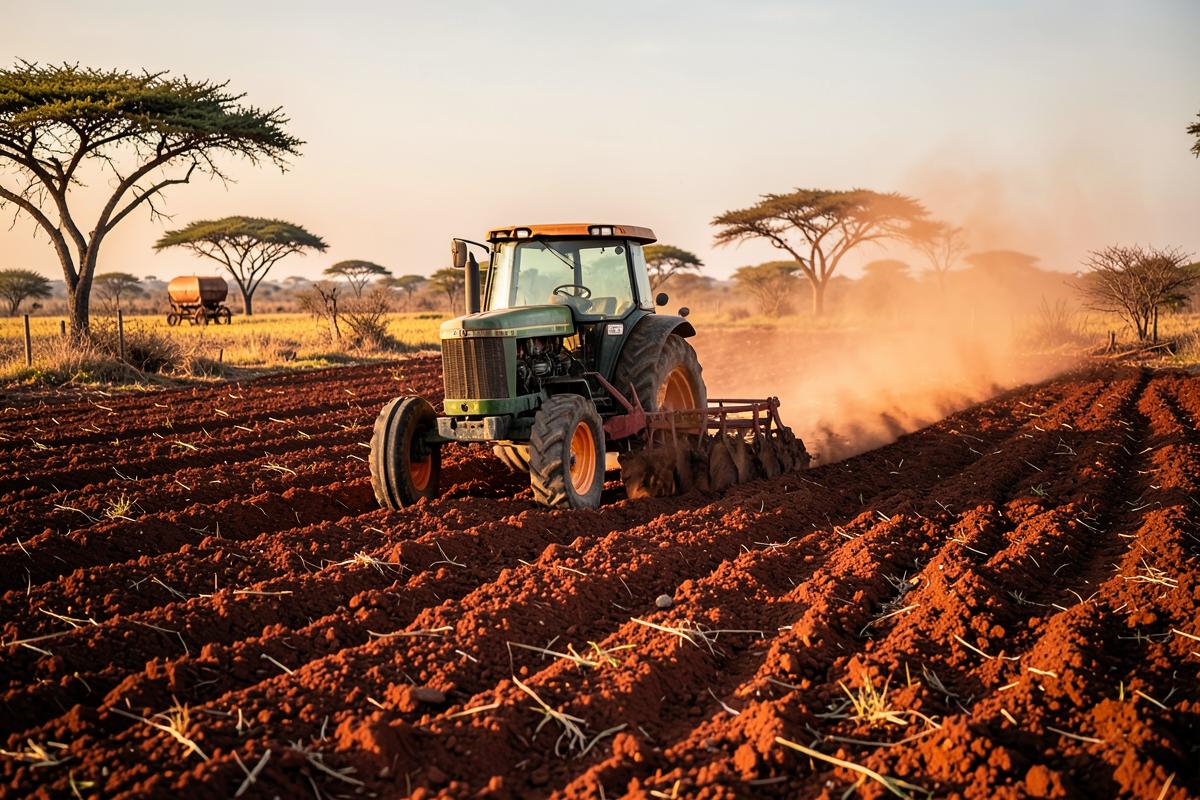
- Rule of thumb
- About 1 tractor of 75–90 hp per 100–150 ha of dryland cropping
- Ploughing output
- Roughly 0.4–0.8 ha per hour for a 3-disc plough
- Service interval
- Engine oil and filters every 250 hours; check daily oil, water and grease
- Hire versus own
- Hire below about 40 ha; ownership starts to pay above that with steady work
Match power to the job
Underpowered tractors burn fuel and break shafts; oversized tractors sit idle and lose value. Size for your heaviest operation, which is usually ripping.
- Under 50 hp: land under 20 ha, light discing, planting, spraying and transport.
- 60–90 hp: 40–150 ha, 3-disc plough, 14–20 disc harrow, 2-tine ripper, boom sprayer.
- 100 hp and above: heavy ripping, wide harrows, large planters and contract work.
- Two-wheel tractors and animal draught still make sense on small plots and steep land.
The implements that earn their keep
Buy in the order the season needs them. A ripper and a plough put more yield on the table than a shiny cab.
- Ripper or subsoiler — breaks the pan, the single biggest yield gain on tired land.
- Plough (disc or mouldboard) — buries trash and weeds.
- Disc harrow — creates the seedbed in one or two passes.
- Planter — accurate spacing and depth beats hand planting on yield and on labour cost.
- Boom sprayer with clean nozzles and a pressure gauge — spray accuracy is chemical money saved.
- Trailer, and a knapsack sprayer for spot work.
Hire or own?
Tractor hire turns a large capital cost into a per-hectare cost you can plan for. It also removes repair risk, which is what usually kills a small farmer's season.
- Hire when your hectares are small, your season is short, or your cash is needed for inputs.
- Get the rate in writing per hectare or per hour, and agree who supplies diesel.
- Book early: everyone wants a tractor in the same two weeks after the first rains.
- Check the operator's work on the first hectare — depth, straightness and overlap.
- FarmInvest tractor hire gives you verified operators, a published rate card, a booking estimate before you commit and a receipt afterwards.
Keep it running and keep the records
A breakdown at planting costs more than a year of servicing. Log hours, fuel and repairs per machine so you know your true cost per hectare.
- Daily: oil, coolant, air filter, tyre pressure, grease points, leaks.
- Weekly: battery, belts, hydraulic hoses, wheel nuts, blade and tine wear.
- Keep a spares kit: filters, hoses, fan belt, shear bolts, tyre plugs.
- Record fuel per operation — a sudden rise means blunt implements, a slipping clutch or wrong gear.
- Store implements under cover and grease exposed metal at the end of the season.
Checklist
- Horsepower matched to your heaviest operation
- Ripper, plough, harrow and sprayer available before the rains
- Tractor hire booked and rate agreed in writing
- Service done and spares kit stocked
- Hours, fuel and repairs logged per machine
Keep your own farm records
Create a free FarmInvest account to record land, equipment, inputs, labour and harvest per block, and see your cost per hectare as the season runs.