
🌾 Harvest, storage and selling
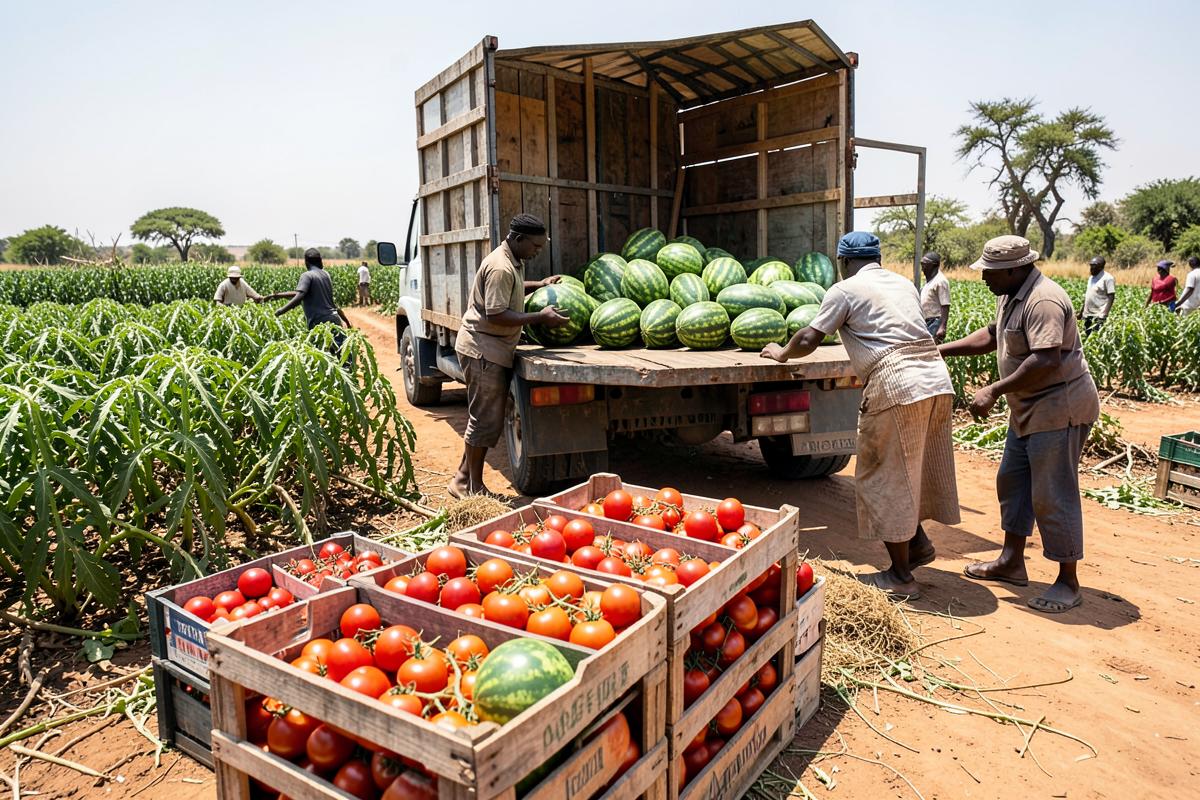
You can lose a fifth of a good crop between the field and the buyer. This guide covers when to harvest, how to dry and store without loss, and how to time a sale so the season actually pays.
- Maize harvest moisture
- Combine at 12.5–14%; store below 12.5%
- Soyabean
- Harvest at 13–14% to limit shattering and splits
- Storage temperature
- Cool, dry and dark; check monthly for heating and insects
- Typical avoidable loss
- 10–20% of the crop, mostly to late harvest, moisture and weevils
Harvest at the right moment
Late harvest costs you to lodging, birds, rodents and rot. Early harvest costs you drying and grade deductions.
- Maize: black layer at the kernel base means physiological maturity; then dry down to safe moisture.
- Soyabean and beans: harvest as soon as pods are dry, ideally in the morning to reduce shattering.
- Groundnuts: lift when the inside of the shell is veined and dark; dry on windrows off the ground.
- Wheat: harvest promptly at maturity — rain on a ripe crop drops your grade fast.
- Buy or borrow a moisture meter; guessing costs more than the meter.
Cut post-harvest losses
Handling is where quiet losses happen. Every extra transfer, every wet night and every hole in a bag takes a share of your crop.
- Set combine speed, drum speed and sieves for the crop — check the grain tank for cracks and unthreshed heads.
- Never dry or shell on bare soil; use a tarpaulin, slab or crib.
- Dry to the target moisture before bagging, not after.
- Use clean, undamaged bags and stack on pallets, away from the wall.
- Grade out broken, discoloured and foreign matter — grade determines price.
Store safely
Grain stores well only when it is dry, cool and protected. Aflatoxin and weevil damage are the two losses buyers reject outright.
- Clean and treat the store before grain goes in; remove last season's residue.
- Use an approved grain protectant at the labelled rate, or hermetic bags and silos where available.
- Keep the store ventilated, rodent-proofed and dark.
- Inspect monthly: feel for heat, sieve a sample for insects, smell for mustiness.
- Never store maize you suspect of aflatoxin with clean grain, and never feed it to livestock.
Sell with a plan
Decide your break-even price before harvest and sell in tranches. Chasing a peak with the whole crop is a gamble, not a strategy.
- Know your cost per tonne — that is your floor.
- Sell in two or three tranches through the season instead of all at once.
- Compare buyers on net price after transport, moisture and grade deductions.
- Weigh and record every load; get a signed delivery note every time.
- Watch the market: FarmInvest shows live Joburg Market prices and Zimbabwe outlooks so you sell on data.
Checklist
- Moisture meter available and harvest moisture confirmed
- Drying surface and clean bags ready before harvest
- Store cleaned and treated in advance
- Grain graded and monthly inspections diarised
- Break-even price per tonne calculated and sales split into tranches
- Every load weighed and recorded
Keep your own farm records
Create a free FarmInvest account to record land, equipment, inputs, labour and harvest per block, and see your cost per hectare as the season runs.