
🐐 Goat Production farming in Zimbabwe
Low-input, drought-tolerant stock suited to Regions IV and V. Goats browse where cattle cannot and give a fast return through kids and chevon sales.
- Season / planting window
- Year-round. Plan kidding for Feb–Apr and Sep–Oct so does kid when browse and grass are available.
- Best regions
- All natural regions; especially strong in Regions IV–V — Matabeleland, Masvingo, Gokwe, Mwenezi and Binga.
- Spacing / population
- Housing 1.5–2 m² per adult goat, 4 m² for a doe with kids. Grazing 6–8 goats per hectare in Region III, 2–4 in Region V.
- Expected yield
- 1.5 kidding per doe per year, 1.3–1.8 kids per kidding; 25–35 kg live weight at 8–12 months for indigenous Matebele, 35–45 kg for Boer crosses.
Stage by stage
Housing & handling facilities
Before stocking
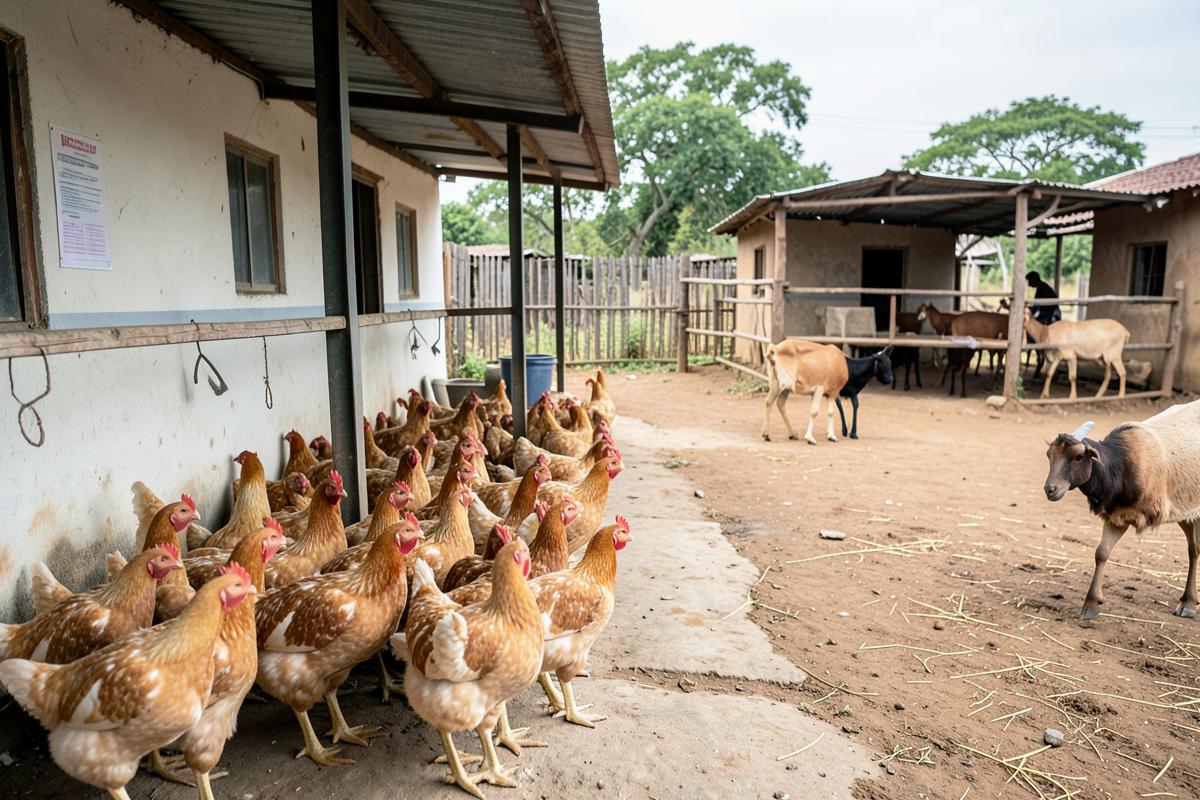
- Build a raised slatted-floor pen 1 m above ground — goats must stay dry; wet bedding causes pneumonia and foot rot.
- Roof it fully, leave the sides open for airflow, and face away from the prevailing wind.
- Fence with 1.2 m diamond mesh or six-strand wire; goats test every gap.
- Add a small handling crush, footbath and separate pens for kidding, sick animals and the buck.
Fertiliser and chemicals
- FertiliserSurvival / production lick
150–300 g/goat/day · Aug – Nov dry season
- FertiliserCrop residues and hay (maize stover, groundnut hay)
1–1.5 kg/goat/day · Dry season
Field tip
Housing beats medicine. A dry, raised, roofed pen prevents more goat deaths in Zimbabwe than any drug you can buy.
The rest of this goat production guide
- 5 more stages, from land preparation through to storage
- 8 more fertiliser, herbicide, pesticide and fungicide entries with rates
- All field tips, plus the printable and downloadable version
- Your own crop, cost and activity records in the FarmInvest app
Full farming cycle guides
Free and complete — land, equipment, crops, inputs and harvest.